I am a collector of old diving helmets and related equipment. I buy exclusively for my personal collection and not for resale.
Because I purchase for my personal collection rather than for resale, I am not subject to the same profit margin considerations as dealers and auction houses. As a result, I am typically able to pay more for items that are a fit for my collection.
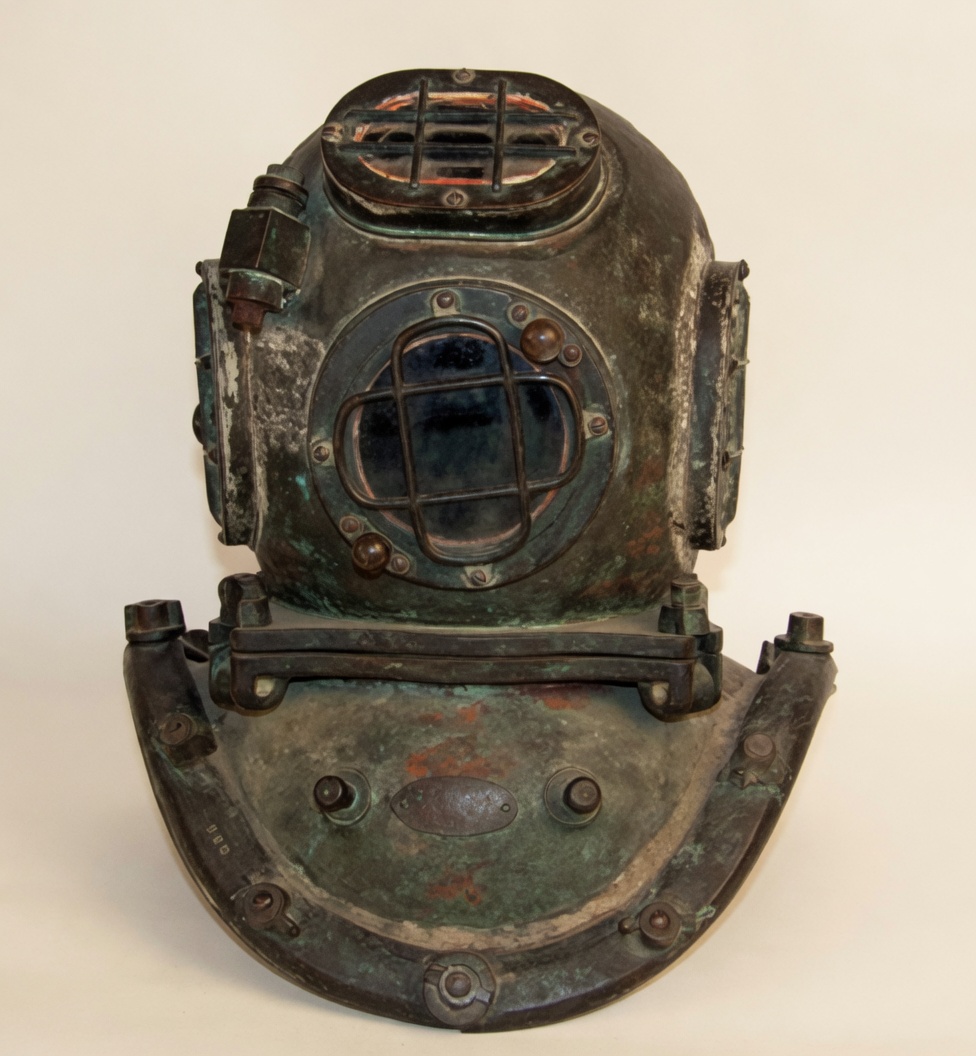
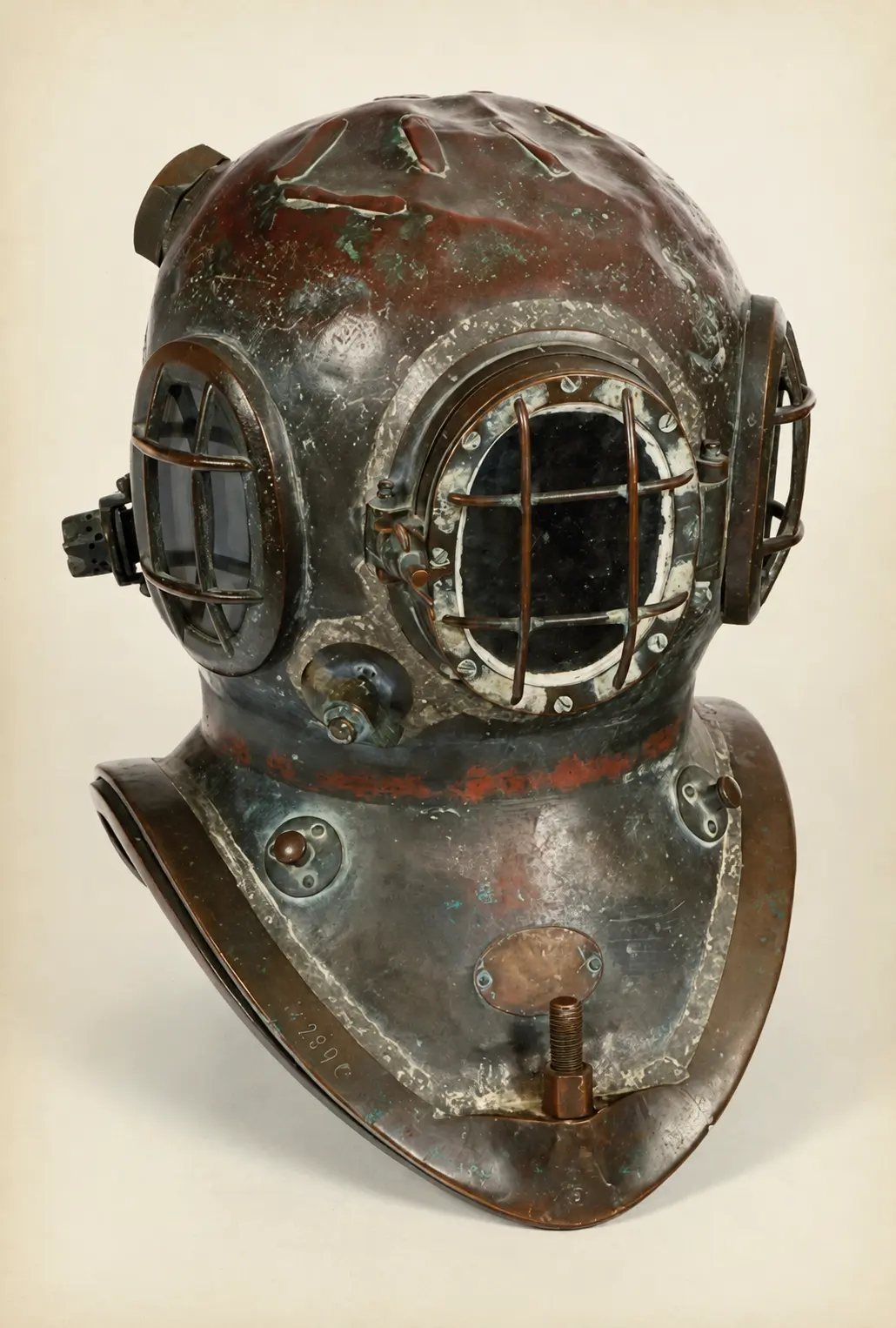
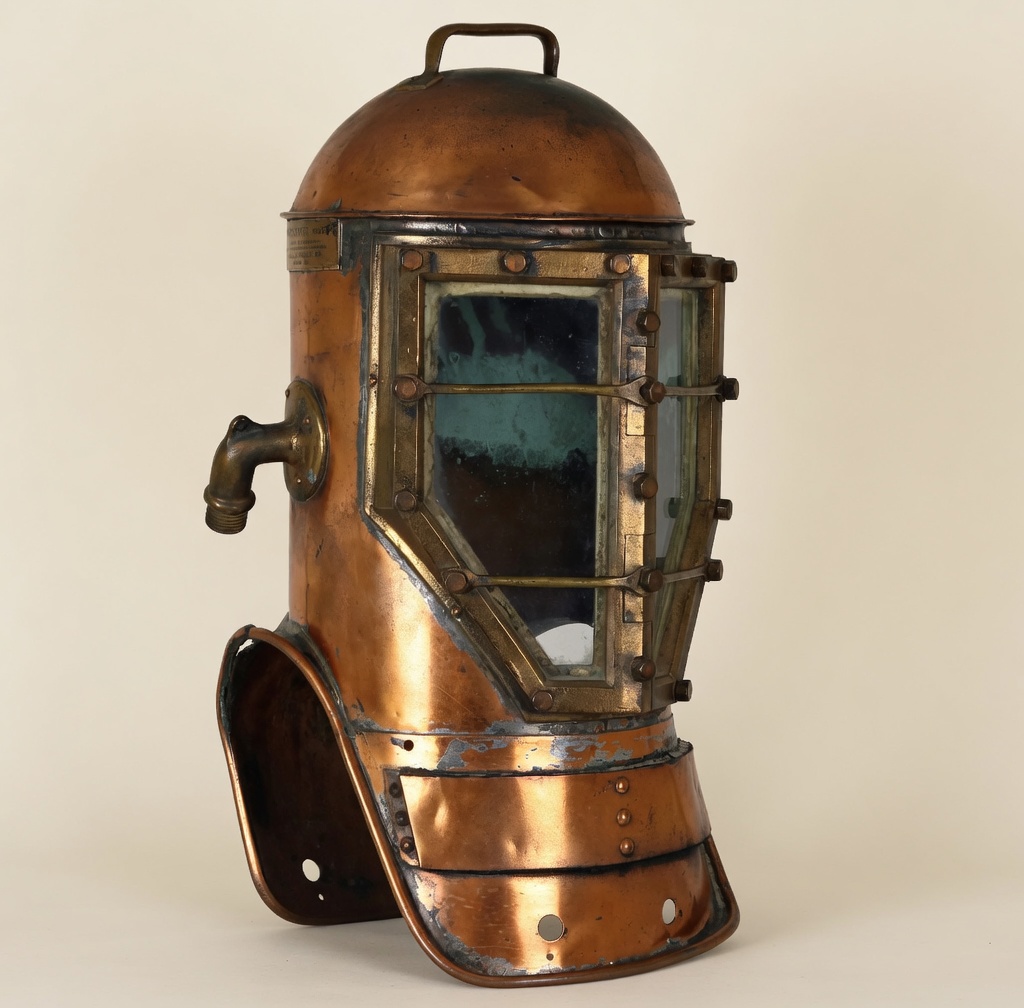
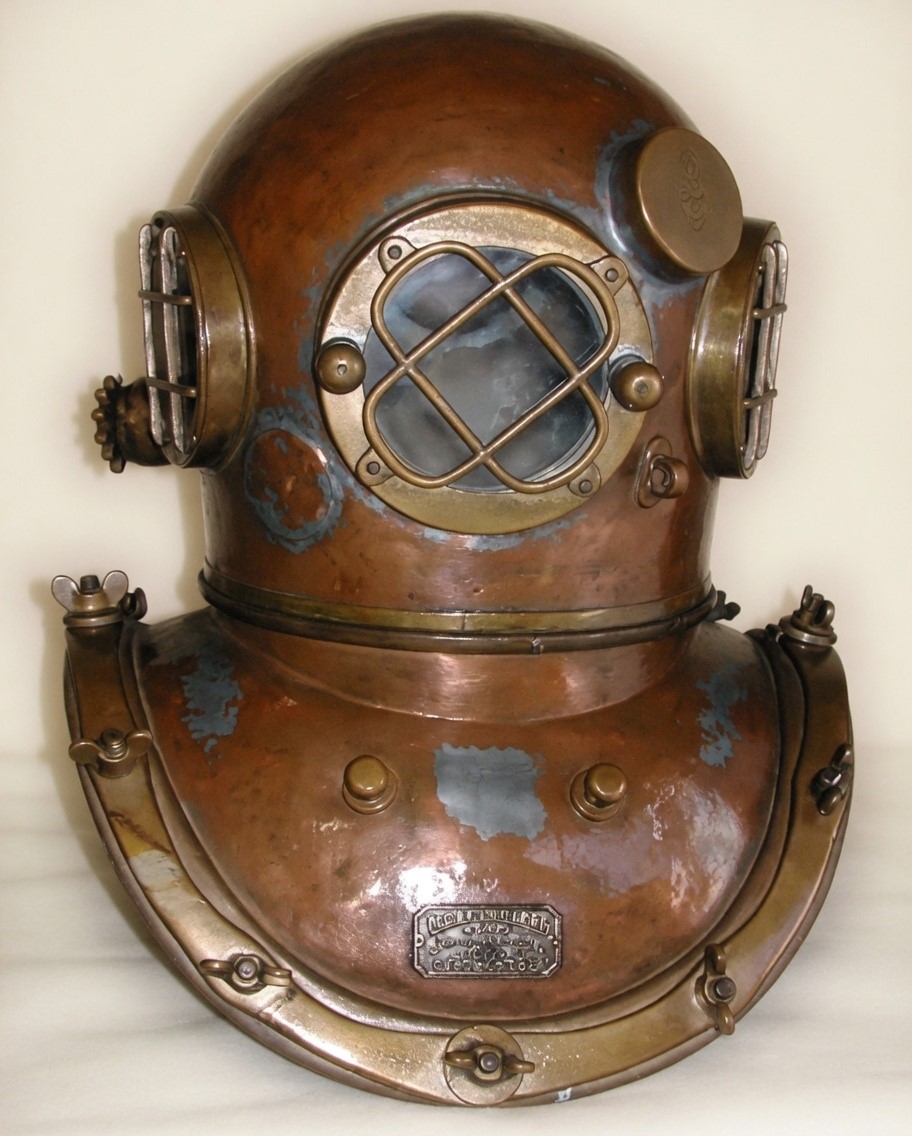
What I'm Looking For
Considering a Sale?
How the Process Works
I buy old diving helmets and related gear throughout the United States.
If you are considering selling a vintage dive helmet or related diving equipment, the process is straightforward.
The first step is simply to send photographs of the item or items showing markings if apparent, the nameplate if there is one and condition issues if any. Let me know that you may be interested in selling as some people contact me just seeking information. I will let you know if I need additional photos.
After reviewing the information, I will let you know whether the item may fit my collecting interests and, if so, we can discuss a possible purchase.
Depending on the location of the item, I may be able to conduct the purchase in person. In other cases, shipping arrangements can be made. In the case of shipping, I will provide the seller with instructions for safe packing. I typically pay for shipping and when appropriate provide shipping materials.
For shipped transactions, a reputable third-party escrow service may be used when appropriate. Funds are securely held by the service until the item has been received, giving peace of mind to both buyer and seller throughout the transaction.
Value of an Antique Diving Helmet:
How Much Is an Old Diving Helmet Worth?
People often ask how much an antique diving helmet is worth, or how much an old diving helmet is worth. The answer varies considerably. Even two helmets that look similar may have very different values depending on a number of factors. For example, what may seem to a non-collector to be a minor variation from one helmet to another may be an important feature that separates a common example from a highly sought-after one. Some important considerations for determining the value of an old diving helmet include:
The maker of a helmet is an important factor in determining value. Importantly, with a particular manufacturer, some models and variations will be much more desirable than others.
Condition can have a major effect on value. For example, damage, repairs or modifications can all affect value. That said, an antique diving helmet does not have to be in perfect condition to have high value, and even helmets in rough shape can be quite valuable.
The completeness of an antique diving helmet can be very important to its value. A helmet that retains all of its expected original components will be more desirable to collectors than a similar helmet with important parts missing.
Missing components can include items such as brails, windows and window guards, valves, communications fittings, or other manufacturer-specific hardware. The importance of a missing part will depend on the part and the particular helmet. Some components may be relatively easy to replace, while others can be difficult or expensive to find, particularly if they are specific to an uncommon model.
Originality is particularly important when evaluating an antique diving helmet. A helmet with its original components and finish can be more desirable than one that has been restored. For example, helmets can sometimes have their value affected by polishing or having their original patina removed. That said, it is not uncommon for a helmet to have been cleaned or polished and these helmets can still be very valuable.
Though the age of a helmet and its rarity can be very important in determining a helmet's value, older helmets are not automatically more valuable. Likewise, rarity alone does not guarantee a more valuable helmet. For example, a helmet that is sought after by both diving helmet and militaria collectors may be worth considerably more than a helmet that is older and/or was produced in smaller numbers.
A documented history is a great addition to have for an old dive helmet and can sometimes add value. Documents or pictures showing where a diving helmet came from or who used it can be of interest to collectors such as myself.
Ultimately, the price of an old diving helmet is mainly influenced by what collectors are looking for. In some instances, collector demand can change over time as certain helmet models or variations become more or less desirable within the collecting community.
Importantly, a vintage diving helmet will almost always have significant value regardless of how it may rank in terms of the factors discussed above. Therefore, even a helmet that may not appear particularly desirable should not be assumed to have little value.
If you have an old diving helmet you are considering selling, or you want to know how much your antique diving helmet is worth, I would be happy to take a look at it. Feel free to send photographs of the helmet showing the front, back, sides, top and, if possible, the bottom showing the underside and inside of the helmet, along with photographs of serial numbers, if any. I'll get back to you as soon as I've had a chance to carefully look over the pictures and perform research if needed.
Frequently Asked Questions
The following questions include some of the most often received inquiries. My contact information is at the bottom of the webpage.
1. Why should I sell to you?
Unlike specialty dealers, retailers and auction houses, I acquire antique diving helmets and related equipment for my personal collection. Because I am not purchasing items for resale, I can usually offer more than those whose business relies on reselling for profit.
I also strive to keep the selling process as simple and straightforward as possible. From the initial exchange of photographs and information to payment and delivery, my goal is to make the transaction easy, transparent and comfortable for both parties. Selling directly to a collector is usually simpler and more convenient than listing an item for sale and managing the process yourself.
2. Does condition of the diving helmet matter?
I am interested in a wide range of vintage diving equipment, including examples that show age, use or are in need of restoration. Condition is only one factor. Even helmets showing considerable age, wear or damage are still of interest.
3. Do you purchase items from estates?
Yes, I welcome inquiries from estates regarding individual items as well as multiple items.
4. How old does a diving helmet need to be to interest you?
I am primarily interested in older diving helmets and related equipment. I focus on pre-1950 items but welcome inquiries regarding all hard-hat diving items.
5. What if I'm not ready to sell yet?
That's perfectly fine. I am always happy to learn about vintage diving equipment and welcome inquiries from owners who are simply gathering information.
6. Are reproductions of interest?
I am interested in authentic old diving gear. If you are uncertain if your vintage piece is authentic, feel free to contact me and I'll be glad to take a look.
7. Can you identify my diving helmet?
Yes, I will usually be able to identify your helmet. Even if the helmet has no nameplate, the manufacturer markings and construction details can provide clues regarding the helmet's maker, whether the helmet was sold for military or civilian use and its approximate age.
8. What if my helmet is incomplete or I only have parts of a helmet?
Missing parts do not necessarily diminish my interest. Incomplete helmets and related parts can still have historical and collectible value.
9. Do dents, repairs, or modifications matter?
Repairs, modifications and evidence of a rough working life can affect the value of a helmet, but in some cases they can also be historically interesting.
10. Is a polished helmet worth more than an original helmet?
No, a helmet is not typically worth more if it is polished. Collectors value originality, patina and historical integrity. However, polished items can still have substantial value.
11. Should I clean or polish an old dive helmet that I may want to sell?
No. As mentioned above, polishing is not good for a helmet's value, as is the case with many types of antiques. Helmets are best left as found. However, if necessary, rinsing with water and gently wiping with a soft cloth to remove loose dirt is fine if done carefully so as not to cause abrasions. As a general rule, cleaning or polishing antiques that have developed a natural patina can make them less desirable to some collectors.
12. What if I'm not sure whether my item is valuable?
Feel free to send photographs and available information. Many owners are uncertain about the age, rarity or value of their antique diving equipment. I welcome inquiries and will provide whatever information I can.
13. Do you travel to purchase diver's helmets and equipment?
I do travel depending on the location and type of items involved. Please contact me with details regarding what you have available.
14. What if I inherited a dive helmet and know nothing about it?
This is actually quite common. Many owners are unfamiliar with the age, manufacturer, history or value of their antique dive helmet or gear. Feel free to send photographs and any information you may have. Even if you know very little about the item, I would be happy to hear from you.
15. Do markings and serial numbers matter?
Yes, manufacturer names, serial numbers, inspection stamps and other markings can provide valuable information regarding an item's history and origin.
16. Do you buy dive equipment recovered from shipwrecks?
I welcome information regarding any unusual finds of vintage diving helmets and related maritime artifacts.
17. Where do you purchase?
I welcome inquiries from throughout the United States.
18. Do you buy helmets that have been converted into lamps?
Yes, this is not an unusual state to find a dive helmet. Many antique diving helmets were modified for decorative use and though this can partially affect the value, I am always interested in seeing photographs and learning more about these pieces.
19. What if I found a helmet while cleaning out a property?
Interesting discoveries are sometimes made in homes, workshops, storage buildings and former maritime facilities. Feel free to send photographs and available information.
20. What if I suspect but am unsure whether my item is related to diving?
Feel free to send photographs. Early diving equipment can sometimes be difficult to identify, particularly when components have become separated from the rest of the outfit.
21. What if I have old photographs of the helmet?
Photographs showing the helmet in use, with its original owner or in a historical setting can provide valuable context and help preserve the story of the equipment. Period photographs and related documentation such as photos, receipts, letters, military records, dive logs and newspaper clippings may provide useful information about ownership, use, location and historical significance of a helmet.
22. How can I tell if my diving helmet is antique?
Age can often be estimated through manufacturer markings, construction details and design features. Many owners are unsure about the age of diving equipment. I welcome inquiries and photographs regardless of your level of knowledge about the item.
23. What is a deep sea diving helmet?
The terms "deep sea helmet" and "deep sea diving helmet" are often used to refer to all types of diving helmets. While collectors and historians may distinguish between deep sea diving helmets and shallow water helmets, owners often use terms more broadly when describing old copper and brass diving helmets. If you have an example and would like more information, feel free to contact me.
24. What kinds of items are you interested in besides helmets?
Items of interest include diving knives, diving flashlights, diver's boots (i.e., weighted boots), communications equipment, documentation and other accessories.
25. Can you appraise a diving helmet?
While I do not provide formal appraisal letters, I am happy to review photographs and provide guidance regarding the value of copper and brass vintage diving helmets.
26. Why do you collect antique diving helmets?
I have a long-standing interest in the history of commercial and military diving and collect antique diving equipment for personal enjoyment and preservation.